
Restrained Compassion
Interpersonal high art

I tend to like doctors. I’ve had the odd bad experience here or there, but more often than not, I’ve found doctors to be intelligent, capable people with real concern for my welfare. Despite their capacity and good intentions, some doctors have better bedside manner than others. I’m still cracking up about the only time I’ve been to the ER and my doctor discharging me with a meek and uncomfortable, “these things happen.” One suspects that you don’t get into emergency medicine if you’re known for your interpersonal tact and grace.
My favorite ever doctor is noteworthy for her bedside manner, but in particular for the reserved way she showed concern for me as a patient, as a person. When discussing a disappointing lab or setback, she had an ability to acknowledge it with a light touch and move on to a gentle game plan mode, every single time. A gentle tsk in her throat, “how frustrating, that’s not what you or I wanted to see. I’m going to try…” A wry smile and an “I’m sure this was exactly how you wanted to be spending your weekend. How about we-”
She’s a standout not for the size of her compassion, but for how surgically precise her execution tends to be. Every time I’ve encountered her, I’ve wished I could bottle her emotional skill and dose other people with it when I’d really prefer someone emotionally competent to talk to.
It’s hard for me to know how common I am in my preferences on not overdoing compassion. I’m a stickler for it, which is a pain in the ass for me and everyone else. I know I’m not alone, because I’ve met others with the same knee jerk push-down style that I have most of the time, but their existence makes it hard to account for how common it is to layer on effusive pity when someone suffers a personal setback. Types like me, given their specific emotional stance, tend to be put off by excessive shows of compassion or empathy, as in this example:
[Person A]: Ugh. I failed that test.
[Person B]: Oh my GOD, that’s awful! I’m so sorry!
Anecdotally, women are vastly more likely to go this hard in response to a mild complaint than men are. They mean well. I talked a bit about how this happens in a previous essay:
…in order to have good responses to serious conversations, you need to figure out how they’re actually feeling - including how much talking they want to do - and respond to and engage with that.
I think people do this for a few reasons. For one, and as I alluded to in the above piece, people are just much more aware of how they feel than they are of how other people feel. If you make the mistake of hopping from your reaction to the assumption that the other person’s feelings match, you’re likely to make people unhappy with your emotional support attempts at least some of the time. I suspect this is more likely if you have bigger feelings yourself. In other cases, I think sometimes people feel anxious about how other people feel, anxious about how well they’re going to respond, anxious about the discomfort of negative feelings, and they overdo their compassion hoping it will cover and compensate. Or simply out of nerves. Emotional regulation tends to be rule zero of handling other people’s feelings.
Some people have a precise instinctual ability to map how others will feel about a setback with very little information, something like a perfect pitch for interpersonal skill. I love these people. I hate it when they pick up on something I don’t want to talk about, by the way, which they’re also way better at than most people are, but I do generally love this ability.
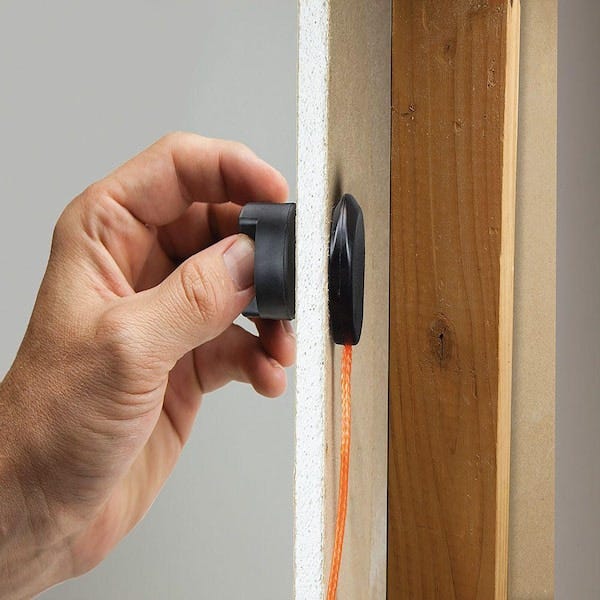
I’ve tried with varying success to build on this for myself. There’s a lot of emotional information in how people use their voices, the expressions on their faces, how they hold themselves. It almost seems to fill rooms, particularly for those in especially uncomfortable or distressed states. Some people’s feelings, under some circumstances, seem to change the air pressure around them. There’s also a strange sense on my end of trying to lock in on exactly what they’re feeling to match it. Getting on someone else’s emotional wavelength feels like grabbing a nail with a magnet through a wall. You can’t see it, but if you’re paying attention, you can feel a real difference between hooking onto the object you’re looking for and waving around helplessly in space.
A few years ago I met a guy who’d been through unimaginable things. He was quiet, sort of sad, seemed both to want to talk about it and to avoid the facts of his recent history. I’m not always good at silence when I should be - I’m often bad at it, especially these days - but I knew if I talked too much the bubble would burst, his tentative willingness to be seen would evaporate, he might be left feeling more alone than ever. I wouldn’t be able to help him with how he felt in any meaningful sense: we weren’t close, we were unlikely to talk much after this, if ever, but for some reason (perhaps for that reason, in fact) he was tentatively opening up to me then.
I don’t really have a memory before or since of needing quite so much of my faculties to emotionally stand at exactly the right distance from someone in pain, neither suffocating nor absent. Eye contact required caution, too - mostly avoiding it seemed to make him feel more comfortable, but it couldn’t be avoided in a way that felt dismissive. I had to separate my own feelings of genuine concern and grief for him from what he actually would benefit from me expressing, in the moment.
I don’t know what became of him; that might have been the last time we spoke? I still think about that conversation, years later. Some people need us to give much less than we’re naturally inclined to give; I don’t know how often we pay attention to the signals for that. I don’t know how often I do, only that I try.
You might be overdoing the amount of concern you show for others when bad things happen (especially if you’re a woman, sorry). People forget that just because there’s such thing as abandoning someone in pain, there’s also such a thing as pressing too close, making them feel overwhelmed and just as unseen. It’s worth learning restraint in compassion.
I believe the male corollary to this is the thing being complained about when women say "stop jumping to solutions and let me vent!".
People sometimes caricature this as female aversion to practical solutions, which feels untrue since in my experience I've never seen a woman whose general stance is that she'd hate it on principle if you were to swoop in and solve all her problems efficiently.
The actual problem is low tolerance for listening to another's emotional distress. It drives people to smother the person's sadness too quickly to actually help. Interrupting the layered accounting of a devastating problem to rush a half-ass solution for one's own comfort and screaming "oh you POOR dear!" are functionally similar errors I think.
Loved this! I will gladly be gendery about this too, and agree: having some male friends lately has been helpful when something’s happened but I know that if I talk about it with my usual besties, I’ll end up suppressing some of my expression, because I don’t want to handle their strongly emotional response. Their effusive expression of empathy can be good in some circumstances though, and I’m prone to being the same way, to a fault.